Review of The Painted Valley: Artists Along Alberta’s Bow River, 1845-2000, by Christopher Armstrong and H.V. Nelles (University of Calgary Press, 2007) 160 pp. paper $54.95 Indexed
The present collection contains 200 paintings by about 70 artists, produced between 1845-2000. The editorial imperative excludes photographs as art, but does offer photos: of Carl Rungius sketching a bear at the Jonas Pass, Alberta, 1910 and painting under an umbrella, Banff.; of George Pepper, painting beside a lake in the Rockies, 1940s; of A.C. Leighton, painting in the mountains (n.d.); of H.G. Glyde at McDougall Church, Morely, Alberta; of James Nicoll, with dog, 1946; and of Marion Nicoll with dog, Calgary, circa 1946. There are lists of the colour plates and black-and-white illustrations, spanning a 150-year period.
According to the authors, there were five “schools” of art: 1) “Imperial Topographers”; 2) “Railway Romantics”; 3) “The Long Shadow of Impressionism”; 4) the British watercolour tradition, and 5) Abstraction and return to landscape painting in “Modernism and After”.
In group 1) we find: Henry James Warre (the first European painter) and his Sketches in North America (1839-1847), based on Edmund Burke principles on the Sublime. Others artists were: R. Barrington Nevitt, a physician without formal art training; Governor General, Lord Lorne, a talented amateur; and C.W. Jeffreys.
In group 2) we learn that, although the steam engine was excluded from art, tourism promotion was funded by the CPR railway, in the mid-1980s. “[It] did not ruin paradise, but rather made paradise more accessible to the artist.” (p. 39). William Van Horne was an amateur artist himself and Melton Prior was an English illustrator, for the London Illustrated News. Others artists were: Thomas Moran; Lucius O’Brien (influenced by Ruskinian art that should have a moral purpose, for Picturesque Canada); Albert Bierstadt, of the Hudson River School; John A. Fraser; Frederick M. Bell-Smith, T. Mower Martin, Marmaduck Matthews; John Hammond; Fredrick Verner, Edward Roper, and Leonard Davis.
Group 3) is about Impressionism, in the 1870s and 1889s. European subjects painted by Canadian artists did not sell well at home. (European outsiders brought the new techniques to Canada.) Some artists mentioned are: Lars Haukaness, Carl Rungius, and Belmore Browne. Of Peter and Catharine Whyte, it is said that she was the more talented of the two” and he “was considerably less accomplished than his wife” (pp. 57-8). Peter’s nephew was Jon (a former president of the Writers Guild of Alberta). The Whytes’ regard for the late stylized mountain paintings of Lawren Harris is described thus, “[It] seems to have stumped the Whytes, for they complained that these paintings looked more like jelly moulds than the real thing.” (p. 58) Robert Gissing is mentioned. There are also a few problems in style. For example, narrating from the point of view of Canadian artists, the authors discuss the influence of the Group of Seven members before the artists themselves (pp. 58, 60). Other artists mentioned are: France Pepper, Kathleen Daly, and Doris McCarthy. Of Illingsworth Kerr, we are told, his paintings were “too modern” for some tastes. Marion Nicoll( née McKay) was anaemic and underweight”, according to her mother.
In group 4), there is a comparison between local artists and “visitor” artists, during the 1920s-1930s. A.C. Leighton, who disliked modernism, was associated with the foundation for the visual arts section of the new Banff School of Fine Arts. He married Barbara Harvey. He was friends with H.G. Glyde, who disliked restrictions of the Provincial Institute of Technology and Art (an education intended for school teachers). Glyde, founded the University of Alberta Fine Art Department, in 1946. Reginald L. Harvey was a roving supervisor of art education for the Calgary school system from 1922to 1931. Harve,py, with Leighton, organized the Alberta Society of Artists.
There are some repetitive (or overlapping) biographical details: on Harvey (p. 73-4, 84); on James Nicoll (p. 67, married to Marion McKay, then met and married Marion McKay, pp. 86-89); and on Illingsworth “Buck” Kerr (pp.64- 68, 96).
Walter J. Phillips, an art teacher at St. John’s Technical High School, taught at Banff School of Fine Arts, in 1940, and was appointed to the Provincial Institute of Technology and Art. (He died in 1963). Other artists mentioned are: Robert Campbell, Herbert Earle, William Hobson; Frederick Cross, James Nicoll, Richard Moore; Luke Lindoe, Holly Middleton, and Margaret Shelton.
In group 5) several artists are mentioned: J.W.G. (Jock) Macdonald (who spent only a single year in Alberta); Marion Nicoll, (of the first Emma Lake Workshop); Ted Godwin, Dorothy Knowles, Ken Christopher; Walter Drohan, Lynn Malin, J.B. Taylor; David Pugh, and Sydney Barker. (See: aboriginal artists referenced below).
In the Conclusion, Chapter 8, “The Power Of Landscape”, the authors sum up how painters have imagined the Bow River Valley: what they expressed about changing views of the natural world and the environment. Mitigating factors that must be considered are outside cultural influences, human agents, public policy, and the post-Edenic perspective.
Since the nineteenth-century, (with Fort Calgary and after the Second World War), The Bow River has been imagined in maps, the law, science, and literature. The authors consulted libraries, archives, government records and newspapers. They culled items from the City of Calgary, the Art Gallery of Ontario, Library and Archives Canada, the National Gallery of Canada, and very few from the Banff School of Fine Art.
Their selection was informed by the imperative that it must be of commercial value, yet they acknowledge: “Alberta had almost no full-time resident professional artists able to earn a living from the sale of their work before 1930.” (p. 71) Armstrong and Nelles, as Professors Emeritus, stipulate that they act as “environmental historians rather than art critics. However, they view nature as art, rather than as mimesis (art “aping” or imitating nature).
Of the indigenous, they refer to aboriginal traditional modes of artistic expression, such as: carving, decoration of objects, and recording collective histories. Except for artists Norval Morriseau and William Huston, the producers of objects art on the Bow River and its Valley “are surprisingly scarce”. (p. 104) Two Gun (also known as “Percy Plain Woman” or Plainswoman”) and folk artists such as Eric Hartmann, Virginia Hemmingston, E.J. Hughes; Magic Realist Rene Thibault, and Jeffrey Spalding are mentioned.
The first draft of the text , by Armstrong, was written for the American Society for Environmental History, re: a meeting in 2004, in Victoria, B.C. It was rewritten for presentation by Nelles. See also: H.V. Nelles, “How did Calgary Get its River Parks,” Urban History Review 34 (2005).
Other sources are: The Bow: Living with a River (presented at the Glenbow during the Alberta Centennial) which contains essays by Gerald Conaty, Daryl Beneti and Catharine Mastin, published by Key Porter Books, 2005 and A History of Art in Alberta, 1905-1970, by Nancy Townshend, from Bayeux Arts of Calgary, in 2005. See also: An Alberta Art Chronicle: Adventures in Recent and Contemporary Art by Mary-Beth Laviolette (Canmore: Altitude, 2006) and Lisa Christensen, A Hiker’s Guide to the Art of the Canadian Rockies (Calgary: Fifth House, 1996 and 1999).
The Bow River and Valley is a region, about which the authors offer a brief account of the “urban” river compared with the pastoral, the picturesque; throughout it operates as a symbol and is seasonal.
I highly recommend this resource as more than another coffee table book, since it offers a sumptuous assortment of delights for the eye.
Anne Burke
Review of The Prairie West as Promised Land, edited by R. Douglas Francis and Chris Kitzan (University of Calgary, 2007) 486 pp. paper $54.95 Indexed.
With a schematic “Introduction” by the editors, this collection of eighteen essays deals with the evolution (and devolution) of the Prairie West as a “Perfect Society”; its European settlers as the “Chosen People”, from about 1841 to 2005. The themes are treated historically and culturally, with the inevitable overlapping, accompanied by the judicious use of black-and-white photographs.
The Garden City and the City Beautiful were emblems of social process in the Edwardian Age. Thomas Mawson, who came to Calgary in 1912, delivered an address “The City on the Plain and How to Make it Beautiful” to the newly formed City Planning Commission. He prepared Calgary, Past, Present and Future, originally called Calgary: A Preliminary Scheme for Controlling the Economic Growth of the City. The Mawson Plan of 1914 set forth the Armouries at the end of Seventh Avenue and a proposed university. The Bow River “itself would be the focal point of a continuous system of parks, playgrounds, and boat reaches.” He advised city council to reserve all riverside areas and land which could not be developed. The river escarpments were preserved for natural park development, linked by bridges (ending at a low-level Centre Street Bridge). Other features were railway depots, shopping malls, and open-air market, with glassed-roof sections. He anticipated the motor-car, with the necessity of diverting traffic out of the city centre, on diagonal spokes to the outlying area. World War I intervened. Not only were the plans (which cost six thousand dollars) not implemented, but they were discovered insulating the walls of an inner city garage. (pp. 182-3)
Of merit is the account of Nellie McClung, based on her autobiographical writing, of “Vision Of The Prairie West As Promised Land”. She was the wife of a prairie pharmacist, who moved from Manitoba to Edmonton, in 1914, and her speeches, as an Alberta MLA from 1921 to 1926, are mentioned.
It appeared that “Alberta was the last, best West, the last frontier of North American settlement, the last place for a Promised Land” (p. 256)
Nevertheless, according to “Immigrant Arrivals In Canada” (1921), (in “Uncertain Promise: The Prairie Farmer And The Post-War Era”) Alberta, (used to growth and immigration), saw some 60,000 people leave, in the 1930s and early 1940s. By 1947, the abandonment rate of relief families settled on farms was at 70 per cent. Edmonton grew faster than Calgary over this period and was, by 1951, the province’s largest city. (p. 340) Between 1921 and 1961, consolidation increased, such that the average farm in Alberta, in 1931, was 605 acres, to over 1400 acres, by 1951. The population had decreased by almost 50 per cent. There was more machinery, albeit with fewer farmers, who lacked political clout.
In 16) George Melnyk, on “The Artist’s Eye: Modernist And Postmodernist Visualizations Of The Prairie West”, deals with “Prairie Harvest”, (circa 1920), by Alec J. Musgrove; “The Exodus”, (1941), by Henry G. Glyde; “Grainscape”, by Don Proch; “Singing the Joys of the Agrarian Society”, (1970), and “Mixed Farming”, (1970), by Vic Cicansky; “Time Expired”, (1973), by Joan Nourry-Barry; and “Farm Drawing”, (1977), by Norman Yates.
In 17) on the Saskatchewan Golden Jubilee, local celebrations, and dedication of the Museum of Natural History, (in 1956), the latter “signified the centrality of Promised land narratives to the anniversary celebrations” (p. 393)
In 18) on Co-Operatives in Alberta and Saskatchewan, (1905-2005), many were dissolved post-World War I; others formed, in the 1920s, were dissolved, in the 1930s. Twelve Saskatchewan farmers, in 1934, decided to control transnational petroleum supplies. (p. 417) The article discusses the cultural importance of locality and social cohesion of the two provinces.
The motif of “Promised Land” is derived from the Book of Exodus, 13:5, in which the Chosen People were led to “a land of milk and honey.” It loosely corresponds with the American dream, of the United States of America, and colonialist aims of the British Empire.
An essential reference is by Northrop Frye, in The Bush Garden: Essays on the Canadian Imagination. From Section I “Visions Of The Promised Land”, we read about early explorers, such as in 1) on John Palliser, Henry Hind, S.J. Dawson (brother of William Dawson) and Lorin Blodgett, explorers of the Canadian North West. Also mentioned are the poet Charles Mair and The Canada First Group (George Denison, R.G. Haliburton, W.A. Foster, and H.J. Morgan, during the 1850s and 1860s).
In 2) we find: Ballantyne, G.A. Henry, Butler, Johnstone, Fraser, Lumsden, Cran, all British Writers in Canadian North West (from 1841-1913). In 1895, fewer than 1,500 new homesteads were granted in Saskatchewan and Alberta. This number rose to more than 40,000, in 1911. (p.49, note 10)
In 3) on the Rocky Mountain Parks Act, (1887), and Romanticism, there are mentions of aboriginal sacred sites. The European vision was as escape or to be plundered. J.B. Harkin, was the first commissioner of the National parks, in 1911, whose appointed author of guide books was Mabel B. Williams. Whereas the wheat field was worth $4.91, the value of picturesque land was $13.88 (p. 64)
In 4) Clifford Sifton, Minister of the Interior in the Liberal government of Sir Wilfred Laurier (whose policy was of two founding peoples) was named Attorney General of Manitoba by Premier Greenway, in 1891. The provincial insistence was that English be the language of schooling, to speed assimilation. The functional region replaced the imagined region, associated with various themes, including “spin” doctors, and a testimonial on Egg Lake, Alberta (p. 86)
In Part II “Settling The Promised Land”, in 5) "The Plains Cree and Agriculture (to 1900)" explores why farming did not form the basis of a viable economy for these people (treaties were broken) with die-off of the buffalo, inadequate tools were provided, combined with unfair practices, government corruption, and a view they were not “true” homesteaders, while the facts shows that Europeans felt threatened by competition.
In 6) “Utopian Ideals”, “The abortive utopia was thus a common mirage in the vanishing landscape of the pioneering West.” (p. 150) Further, “Whether aristocratic or democratic, liberal-anarchist, communist or socialist, the utopian experiments were a necessary pastoral phase in the pioneer development of the West.” (p. 151) This Edenic quest for “paradise” (1880-1914) was accompanied by “booster” literature, democratic socialist experiments. In 1888, Lethbridge and Fort Macleod were venues for polygamy which “secures a husband for every woman that wants one, giving her a large stock to select from, and by division of labour, it also ensures better supervision and kinder treatment for the rising generation” (p. 147) From a commercial point of view, Mormon boycott of “gentile” stores. Of interest are the Doukhobor settlements in Thunder Hill, Swan River, and Yorkton; the appearance of alcoholic temperance and economic difficulties; the late nineteenth-century utopian visions of Ruskin, Bellamy, Hudson, and Morris. One may compare English with French, and, later manifestations in the Social Credit Movement.
In 7) the eligibility for homesteading was set forth in the Homestead Act of 1915 for Saskatchewan. Yet, it was not until 1979, that women finally secured an equal share in matrimonial property.” (p. 167) Evidently, some settlers were more equal than others; individual toil was not always a communal effort.
In Part III “Envisioning The Prairie West As A Perfect Society”, in 8) “Perfection by Architectural Design” reveals the Mormon colonies were buildings based on New England. These elements were: of private property versus common good; urban reform through urban design and civic planning, in conjunction with the Temperance Society.
Some of the relevant literature was: H.G. Wells, A Modern Utopia (1905); Aldous Huxley’s Brave New World (1932); and George Orwell’s Nineteen Eighty-Four (1949) on eugenics. Other notable figures are mentioned, such as J.S. Woodsworth and Thomas Mawson. Mawson was born in 1861. He designed campus plans for a University in Calgary, for example. Coming to Calgary, in April of 1912, he played a role in the City Planning Commission in Calgary which was newly formed to develop a plan for an “Ideal City”. (p. 182) The Mawson Plan of 1914, quoting Ruskin, was not implemented, due to cost, after the Edwardian Age’s spirit of optimism ended.
In 9) “Land of the Second Chance”, Nellie McClung’s Vision is accepted as “not a naively optimistic propagandist” (p. 199).
10) J.S. Woodsworth, of the CCF, is described as “an exemplary social gospeller”. In this context, the physical west and the social west are components of this ideal prairie land. He moved from the Methodist Church to social reform, believing that great economic wealth or the spirit of materialism would harm spiritual growth. The policy was for assimilation of problem “foreigners” as having potential, as Anglo-Protestants or part of the mosaic.
In 11) “The Utopianism Of The Alberta Farm Movement (1909-1923)”, we learn about Henry Wise Wood, the UFA’s President, the “Moses of Alberta”. There were small communes, the wheat pool; while on the frontier, we find religious, reform movements. At the outset, agrarian co-operatives replaced competition, by the United Farmers of Alberta, after the election of 1921, but were replaced by Social Credit, in 1935. They first experienced the failure of dry farming, in the 1930s, when it was feared that cities might spread like cancer, from a pastoral view.
In Part IV “A Promised Land For The ‘Chosen People’”, in 12) there was “No Place” for a woman, to cause gender tensions, since 1894-1996. The Gould v. Yukon Order of Pioneers case depicts Victorian gender type of a “manly” space, nation-building and wilderness “going”. “Typically, women were represented as existing outside of the masculine enterprise of settlement. When women do appear, it is more often as ‘civilizers’ or ‘gentle tamers’.” (p. 265) Some of the notables are: Ralph Connor, John Wilcox, Frances Simpson (wife of George Simpson), and the Foss-Pelly scandal. The arrival of European women was seen to disrupt peaceful relations and marital alliances between European men and Aboriginal women. (p. 268) By 1920, all three prairie provinces introduced a dower law. In 1925, a matrimonial property bill that anticipated joint ownership, followed a 1920 women’s resolution for equal custody and equal property rights for husband and wife. Of note are: The Farmers in Politics (p. 279) published in 1920. McNaughton wrote for The Western Producer.
In 13) “Preaching Purit”y was the function of the Anglican Bishop Lloyd (1861-1940), on Immigration being the creation of a perfect Anglo-Saxon community, which challenged the Railway and Immigration Policy.
In 14) the RCMP Policing of Communists and Ukrainians is examined. Some of the sources are: Pierre Berton and Jonathan Vance. There were many mistakes made, in dealing with the unassimilated or too radical, during the Inter-War period, with the Chinese Immigration Act and the opium trade. In 1930, 25,000 KKK in Saskatchewan, were equal in numbers to the United Grain Growers Association. “The fact that members of the KKK shared similar backgrounds to those in the RCMP meant that, from the perspective of the police, the KKK did not challenge Anglo-Canadian traditions and institutions to the same degree as the Communist Party of Canada did.” (p. 327)
In Section V: “Readjusting The Vision of The Promised Land in the Modern Era” about “A Promised Land for the ‘Chosen People’”, the editors would like to see the theme extended “to other groups such as Blacks, Asians, Jews or Arabs” (p. XVII)
Like the other contributors, the editors have impressive credentials. Francis, who contributed “The Kingdom of God on the Prairies: J.S. Woodsworth’s Vision of the Prairie West as Promised Land”, specializes in Canadian intellectual history and Western Canadian History. Kitzan, who contributed “Preaching Purity in the Promised Land: Bishop Lloyd and the Immigration Debate”, manages content creation for the Web Content and Services Division of the Library and Archives, Canada.
Anne Burke
Review of History of the Book in Canada: Volume 3: 1918-1980, edited by Carole Gerson and Jacques Michon (Toronto: University of Toronto Press, 2007) 611 pp. Indexed Cloth 0802090478 $85.
This is an essential resource for both public, school and university libraries, not only of this country, but internationally, because of its significance to scholars and general readers.
Under the banner of “Alberta”, we discover: “censorship”, “education”, “government support of the arts”, “libraries”, “literacy”, “mass-market distribution”, and “publishing.” Somewhat surprisingly, in 1946, Alberta became the first Canadian jurisdiction to respond to concerns about funding the arts through government sponsorship. When the Canadian Arts Council was established in 1945, this province set up a series of arts boards to support cultural activities, in 1946. (“High Culture Nationalism and the Missing Book”, in “The State and the Book”, by Paul Litt, p. 37).
Take note of one of the Case Studies, “Collecting Canadian Manuscripts at the University of Calgary, by Apollonia Steele, about the “special mission” to collect the papers of contemporary Canadian authors, following the landmark Canadian Conference of Writers and Critics. By 1980, the Rare Books and Special Collections Department of the University of Calgary Library had become an internationally recognized research centre for Canadian literary and cultural studies. In the 1980s it would begin to publish detailed finding aids to specific collections in order to further facilitate research. (p. 114)
Under “prairies”, we uncover: “folklore”, “libraries”, “publishing”, and “study groups”. See also: “individual cities and provinces”; “Ukrainian (language)”. Fiona A. Black, who was an editor of Volume 2 of HBIC/HLIC, in “Prairie Publishing” (in “Trade And Regional Book Publishing In English”) we can learn more about Western Producer Prairie Books, founded by the Saskatchewan Wheat Pool, in 1954; Peguis Publishers, Hurtig Publishing, and several others. “Alberta took over first place by 1978, as a result of Hurtig” (a notable project being The Canadian Encyclopedia, in 1980). Yet, W.O. Mitchell’s Who Has Seen The Wind “has never been published in the Prairies.” (p. 185)
In “The West”, by Dominque Marquis, the story of French-language print culture and publishing in the Western provinces deals with Editons du Blé (and its additional reincarnations) asserting its own identity and “freedom” from Québec.
In Part Eleven, “Publishing And Communities”, the reader will enjoy: illustration 11.3 “The Canadian Small Press”, concept by David McKnight and graphic artist: Jennifer Garland (p. 309). As far as “controlling the means of production [which] has long been at the ideological centre of the small press movement”, Louis Dudek is the unacknowledged theoretician cum practitioner. Any serious study must undertake to deal with both the English-Language Small Press Publication and French literary presses and literary magazines, (”The Small Press in Quebec”), as well as those in both languages (after the 1960s).
The essay on “Small Press Publishing” is by David McKnight (a specialist in the area of “Electronic Text and Image”) who was a part-time lecturer at McGill University, before joining the faculty of the University of Pennsylvania. He is the author of an “Annotated Bibliography of English Canadian Little Magazines, 1940-1980” (a Masters thesis, Concordia University, 1992), in which this form is defined as: “the non-commercial production of books and periodicals with a literary orientation, issued in limited runs for specialized readerships, and often dedicated to experimental writing or identity-based perspectives.” (p. 310).
The Canadian small press movement, which began in the 1920s, is surveyed for the 1940s, and in the 1960s (TISH) but the prairies had to wait until the 1970s, when “Across the West, new presses were founded annually.” (p. 315). Some of the benchmarks are: in 1972, the creation of The Writing and Publishing Division of the Canada Council; in 1975, the founding of the Literary Press Group; then the rise of the Provincial arts councils, which made possible “a strong cross-country regional press network.” (p. 310)
In “Publishing by Women”, by Carole Gerson, (whose previous focus to which she will now return is on Canada’s early women writers) relies on Myrna Kostash, “The Feminist Press—Is Anyone Out There Listening?” Chatelaine, March 1975. Gerson notes: “In the absence of a reliable inventory of Canada’s feminist press, I have compiled a list of some fifty publications founded before 1980, drawn from numerous sources and all subsequently verified… a few from smaller cities, such as Edmonton (On Our Way, 1972-4; Branching Out, 1974-80, and Saskatoon (Prairie Women, 1979-81). Of a 1991 survey, which lists forty-four extant periodicals, more than half were founded after 1980. (notes 51 and 53, p. 545).
Between 1918 and 1980, there were “proportionally few[er] publications in which their participation was specifically identified at the level of the publisher’s imprint” (p. 319). With the franchise to vote, by 1919, and in Québec, in 1940, (first executed it in 1944), there were lingering vestiges of first-wave feminism, until the 1960s. “Whereas only a few new women’s periodicals appeared during the 1960s, the following decade saw at least fifty spring up across the country.” (p. 320) Some of the many hallmarks of second-wave feminism appear: in 1967, with the Royal Commission on the Status of Women, and in 1975, International Women’s Year. Some presses are mentioned in passing, with Press Gang, Ragweed/gynergy, and Eden Press.
This first edition is being marketed as the third and “final volume” of the series, with general editors Patricia Lockhart Fleming and Yvan Lamonde (the latter who edited Volumes 1 and 2). Francess G. Halpenny, who was the general editor of DCB/DBC, from 1969 to 1989, contributes “Scholarly and Reference Publishing”. Michael Peterman, known for his research in other areas, contributed “Sports Writing”. Peter Buitenhuis prepared a Case Study on “The CAA [Canadian Authors Association] and Propaganda during the Second World War.” Frank Davey offers “Economics and the Writer.” Catherine Owen, who has published eight collections of poetry, contributes a paper on “Allophone Authorship”. (“Allophone” refers to authors who write in languages other than French or English.)
Part One: “The Cultural Influence of Books And Print In Canadian Society” deals with 1) “The Book And The Nation”: with respect to “Imprinting the Nation in Words, Government Policy and Allophone Cultures”, “Native-Oral and Print Culture”, “The State and the Book”, “Book Policy in Quebec”, “Translating the Two Solitudes, Candianization of the Curriculum”, Case Studies of “Canadian Content in Primary Textbooks in Québec”, “Cohering through Books, Picturing Canada”, 2) “Symbolic Value Of Books”, “Books and Reading in Canadian Art”, “The Image of the Book in Advertising”, “Prize Books in Québec”, “Marshall McLuhan and the History of the Book”.
Part Two: “Authorship” deals with 3) “Authors’ Careers: Social and Cultural Profile of Writers”, “Allophone Authorship”, a Case Study of “The Canada Council for the Arts Writer-in-Residence Program”, “Celebrating Authorship: Prizes and Distinctions”, “Writers’ Networks and Associations”. 4) “The Author And The Market: “Writers and the Market for Fiction and Literature”, “Writers and the Market for Non-Fiction”, “Children’s Authors and Their Markets”, a Case Study of Leslie McFarlane and the Case of Pseudonymous Children’s Authorship”, “CBC Radio and Allophone Authors”, “Adaptations for Film and Television.”
Part Three: “Publishing For A Wide Readership” deals with: 5)” Trade And Regional Book Publishing In English”, “The Agency System and Branch-Plant Publishing”, “Trade and Regional Publishing in Central Canada”, “Atlantic Canada”, “Prairie Publishing”, a Case Study of “Harlequin Has Built an Empire”, “British Columbia and the North”, “Organization and Training among Book Publishers”, a Case Study: “From Tea Room to Top Floor: The Book Publishers’ Professional Association”, 6) “Publishing Books in French”, “Book Publishing in Québec”, a Case Study: “Les insolences du frère Untel / The Impertinences of Brother Anonymous”, “Ontario”, “Acadia”, “The West”, “Francophone Organizations in the Book Trade”, 7) “Publishing For Children and Students”, “Publishing for Children”, “The Rise and Fall of Textbook Publishing in English-Canada”, Case Study of “Coles Notes” and of McClelland and Stewart and the Quality paperback”, “Textbook Publishing in Quebec”, Case Study of “French-Canadian Classics from Fides”; 8) “The Serial Press”, “Major Trends in Canada’s Print Mass Media”, “Women’s Magazines”, and Case Studies of “Almanacs in French Canada”, of “Serial Pulp Fiction in Québec”, of “Canadian Pulp Magazines and Second World War Regulations’.
Part Four: “Publishing For Distinct Readerships” deals with 9) “Government and Corporate Publishing”, “Government as Author and Publisher”, a Case Study of “The Federal Government’s Advice to Mothers”, “The Publishing Activities of CBC / Radio Canada”, “CPR in Print”, 10) “Organized Religion And Print”, “The Religious Press in Quebec”, a Case Study of “The Magazine Relations”, “Catholic Publication and Distribution of Books in French”, a Case Study of “A Catholic Best-Seller”, “The Journal of Gérard Raymond”, “Print and Organized Religion in English Canada”, “Publishing for Young Christians”, 11) “Publishing And Communities”, “Publishing and Aboriginal Communities”, “Allophone Publishing”, “Jewish Print Culture”, a Case Study of “Free Lance, “Publishing Against the Grain”, 12) “Scholarly and Professional Publishing”, “Scholarly and Reference Publishing”, a Case Study of “R.E. Watter’s Check List of Canadian Literature”, “Scientific Periodicals”, “Legal Publishing”, “Medical Publishing.”
Part Five deals with: “Production”13) “Printing And Design”, “The Canadian Printing Industry”, a Case Studies of “Thèrien Frères”, of “From Humble Beginnings: Friesens Corporation”, of “Learning the Trade: The École des arts graphiques de Montréal, of The Livre d’artiste in Québec, of “The Alcuin Society”, of “Cartier: Canada’s First Typeface”, “Working in the Print Trades”, “The Graphic Arts in Québec”, “The Private Press”, “Book Design in English Canada”.
Part Six deals with: “Distribution” Systems of Distribution”, “International Sources of Supply”, “The World of Bookselling”, Case Studies: “The Book Room”, of “Librairie Tranquille”, “Control and Content in Mass Market Distribution”, “Book Clubs”, “Booksellers’ Organizations.”
Part Seven deals with: “Reaching Readers” 15) “Libraries”, “Government Libraries”, “The Canada Institute for Scientific and Technical Information”, “National Library of Canada”, “Bibliothèque nationale du Quebec”, “The Rise of the Public Library in English Canada”, “The Public Library in Quebec”, “Academic Libraries”, “Special Libraries”, “The Profession of Librarianship”, 16) “Reading Habits”, “Measuring Literacy”, “Surveying the Habit of Reading”, “Best-Sellers”, “Fan Mail from Readers”, “Autobiographies of Reading: L.M. Montgomery and Marcel Lavalle”, 17) “Controlling And Advising Readers”, “Government Censorship of Print”, “Religious Censorship in English Canada”, “From Censoring Print to Advising Readers in Québec”, “’Read Canadian’”, “Encouraging Children to Read”, 18) “Special Communities of Readers”, “Reaching Out to Isolated Readers”, Case Study of “Libraries On the Move”, of “Libraries on the Move”, of “Women’s Institute Libraries”, of “Wheat Pool Libraries”, “Reading on the ‘Rez’”, “Reading in Alternative Formats”, “Reading and Study Clubs”, Case Study of “Sociétié d’étude et de conferences.
Other features are the “General Editors’ Preface”, “Acknowledgments”, “History Of The Book In Canada / Histoire Du Livre Et De L’Imprimé Au Canada” (HBiC / HLIC) Advisory Board, (HBiC / HLIC) Editorial Committee, (HBiC/ HLIC) Editorial Team, (HBiC / HLIC) Volume 3 Team, Abbreviations and List of Illustrations. The collection ends with a “Coda”, by Gerson and Jacques Michon. They conclude:” Literary history used to be impossible to write; lately it has become much harder,” as an American critic quipped, in 1995. (See: Lawrence Lipking, “A Trout in the Milk,” in The Uses of Literary History, edited by Marshall Brown, 1-12. Durham, NC: Duke University Press, 1995.)
The Chronology situates events in general history with the evolution of the book industry Canada. There are many black-and-white Illustrations, Charts, Map, and Tables. Of the latter, information is provided about Members of the (SéC) Sociétés des écrivains canadiens and of the Union des écrivains québécois (UNéQ). a) “Not all members are covered in this compilation as 10 to 15 per cent do not appear in dictionaries and other reference sources that identify their output. As many authors work in more than one genre, the total percentages exceed 100”. The same proviso applies to members of the Writers Union of Canada (WUC), as compiled by Nancy Earle from The Writers’ Union of Canada Directory, (1981.) The “Selected Writers’ Organizations 1918-80” (with identification of organizations still in existence in 2005) will be helpful. “Labour in the Book Trades”, with divisions by sector, occupation, and gender, in the printing trades, in available for selected Canadian cities, 1921-1961, based on the Census records. To round about this compendium of literary history, there are: “End Notes”, “Sources Cited (Archival Sources, Published Sources), and “Contributors”.
Anne Burke
Review of Medicine And Duty: The World War I Memoir of Captain Harold W. McGill, Medical Officer, 31st Battalion C.E.F., edited by Marjorie Barron Norris (University of Calgary Press, 2007) 382 pp. paper ISBN 1-55238-193-5 978-1-55238-193-9 $39.95 Indexed.
This is a literate, readable account of day-to-day events, based on first-hand diary entries. The working title of the first draft was “Reminiscences Of A Battalion M.O.” There is a photograph of the Officers Of the 31st Battalion, Canadian Expeditionary Force At Calgary, Alberta, dated February 1915. From one of the original passenger lists still in McGill’s possession, he offers a list of the officers on board the Carpathia, “the ship that had rescued the survivors of the Titanic disaster a few years before.” (p. 49) Each of the twenty-four chapters is prefaced by quotations from Shakespeare: King Henry IV, part II, and Act V, Scene V, Introduction; King John, Act IV, Scene III, Act V, Scene I, Macbeth, Act V, Scene IV, Scene VI; King Henry V, Act II, Prologue, Act III, Scene V; King Henry V, Act II, Prologue; King Henry VI, Part I, Act III, Scene III, Part II, Act II, Scene IV, Part III, Act II, Scene V; Troilus and Cressida, Act IV, Scene V; Julius Caesar, Act I, Scene III; Anthony and Cleopatra, Act IV, Scene III; King Lear, Act III, Scene IV. In addition, there are other sources: Brete Harte, The Reville; William Cullen Bryant, The Death of the Flowers; Edward Fitzgerald, Rubaiyat of Omar Khayyam; Southey, The Battle of Blenheim; James Thomson, The Seasons; and John McRae, The Anxious Dead.
McGill (1880-1961) wrote: “We have heard a lot since of our boys going to war to end war for all time to come. Personally I was never actuated by any such abstract idea, and I doubt very much if the idea ever occurred to a single one of the thousands who enlisted during the early months of the war… Later, some of them may have thought that they had joined the colours on account of the ‘abolish war’ idea because of the appealing nature of the ideal; but, as I have said, I have the strongest doubt that a single solider ever enlisted from this motive.” (pp. 9-10).
McGill served as President of the Calgary Medical Society, the Calgary member of the Council of the College of Physicians and Surgeons of Alberta, and was one of the Alberta members on the Medical Council of Canada. In 1926, he was elected to the Calgary City Council, where he served two terms. In 1930, he became a Member of the Legislative Assembly.
According to the “Editor’s Introduction”, McGill was Deputy Superintendent General of Indian Affairs for Canada (1932-1938). Following the amalgamation of the Department of Indian Affairs…, McGill became Director of Indian Affairs until his retirement in 1945. (p. xiii) In the “Epilogue”, Premier R.B. Bennett, in 1932[?], appointed McGill Deputy Superintendent General of Indian Affairs. “The Superintendence of Indian Affairs for Canada was a powerful position comparable to that of deputy minister. He held that office for twelve years, until his retirement at age sixty-five.” (p.343)
McGill met and married a Calgary nurse Emma Griffis. There is a photograph of her outside The Calgary General Hospital (p. 302). Their honeymoon was during the time-frame of the Battle of Arras. The onset of the great Spanish Flu pandemic was in 1918. Emma was unable to find work “due to a debilitating bout of influenza” but they shared a holiday in 1919. They had two daughters, Kathleen and Doris. Emma was a member of the Women’s Canadian Club and the Women’s Conservative Association.
McGill belonged to the 103rd Regiment Calgary Rifles, when the war began; in 1914, he was thirty-four years of age. He returned from the war in 1919. The present memoir deals with his service to the Alberta 31st Battalion, from its barracks at the Calgary Exhibition Grounds, to the Second Battle of Loos; the Battle of Sanctuary Wood; the Battle of the Somme; and Vimy Ridge (the Canadian Army’s taking of the Ridge, in 1917). Then he was transferred to the 5th Field Ambulance, before Passchendale; the Battle of Amiens; and the Last Hundred Days.
A “Foreword”, by Patrick H. Brennan, Centre for Military and Strategic Studies, contains suggestions for future reading, whether scholarly or front-line accounts by the participants. McGill’s is not “the best recollection of the war by an ordinary Canadian soldier”, an honour which Brennan accords to The Journal of Private Fraser: 1914-1918, edited by Reginald H. Roy. However, McGill’s memoir “effectively complements [it]. (notes 1 and 2, p. vii)
This is the first publication of the memoir, albeit heavily edited (or at least condensed and abbreviated), with generous footnotes. The Glenbow Archives contains McGill letters (1915-1919). Some of them have been reproduced here. In McGill’s “Letter to Frances McGill” (his sister who was also a doctor) dated 10 October 1915, he commented on the Tour of Duty (pp.95-97). There is a copy of a handwritten letter from McGill to Emma Griffis, (15 April 1916), in which he described The Battle of St. Eloi. (pp. 158-160). In McGill to Emma Griffis, dated 5 February 1916, “Harold Answered Emma’s Queries Relating To Trench Duty And Army Rations, And Gave News Of Mutual Acquaintances Now Overseas” (pp. 132-137). Another letter (12 December, 1918), was sent to Harold McGill, from Ben Jones’ Brother Thomas Llewellyn Jones (pp. 213-216). There is A Letter from McGill to Birdie Stacey dated 13 April 191), (pp. 273-275). McGill wrote to Emma Griffis, on 12 July 1917, “At 11.20 p.m. Harold Penned His First ‘Love Letter’ To Emma” (pp. 305-307).
Norris, a writer and historian who lives in Calgary, is the author of A Leaven of Ladies: A History of the Calgary Local Council of Women and Sister Heroines: The Roseate Glow of Wartime Nursing, 1914-1918. Janice Dickin is the series editor for the Legacies Shared Series, of which this title is number 23. The avowed purpose is to create, save, and publish voices from the heartland of the continent that might otherwise be lost to the public discourse.
In addition to the Epilogue, the text contains maps; illustrations; some black-and-white photographs. There are “McGill’s Summary Of Casualties In The Two September Actions” (September 15 and September 26) (p. 228); a checklist of “our casualties during the main action of Vimy Ridge, April 9 and 10 (p. 281). By May 13, McGill records casualties again (p. 286). An appendix of “31st Battalion Casualties [from November 14, 1914] To November 11, 1918” is annotated with Number, Rank, Name, Causes DOAI (accidental injury); DOD (disease); DOW (drowned); KIA (Killed in Action); MPD (Missing Presumed Dead); and Awards.
A Chronology of Events and Biographical Milestones would have been helpful for the casual reader.
Anne Burke
Review of Rabbis & Their Community, Studies in the Eastern European Orthodox Rabbinate in Montreal, 1896-1930, by Ira Robinson (University of Calgary Press, 2007), 173 pps. paper $34.95 Indexed.

The germ of this book was not only a series of lectures at the Jewish Public Library in Montreal but preliminary research for a comprehensive biography of Rabbi Yudel Rosenberg (1859-1935), including his predecessor Rabbi Simon Glazer and his rival, Rabbi Hirsh Cohen. Robinson also alludes to Getsel Laxer (1878-1942) and Hyman Meyer Crestohl (1865-1928) “to illustrate the tensions, resentments, and conflicts.” Hirsh Wolofsky (1878-1949) was publisher of the Keneder Odler, Montreal’s Yiddish-language newspaper. These learned men left a legacy of writings, whether published or unpublished. The singular “community” signifies that they shared the same milieu, represented by the Jewish Community Council of Montreal, founded in 1922. “The Kehilla movement was a wonderful dream.” However, politics interferes with religion. The “Kosher Meat Question” became “The Kosher Meat Wars of the 1920s.” “The war was not just a propaganda war…It was also a physical conflict.”
The author, who previously published in Canadian Ethnic Studies, Canadian Jewish Studies, and Jewish Political Studies, surveys previous scholarship in this area and finds it wanting, for a variety of reasons. He draws on Census information, newspaper articles, correspondence, legal and synagogue records, in dealing with economic exigencies, resistance to assimilation, and other controversies of the day, such as use of the kabbala, in reconciling the Torah and science. He concludes with the implications of the findings of this book for the subsequent history of North American Orthodox Judaism and its importance.
With a “Preface”, “Afterword”, Glossary, and Notes, this is an accessible account, suitable for social and ethnic history studies, as well as required reading for scholars of A.M. Klein and Irving Layton, in Jewish Canadian Literature.
Anne Burke
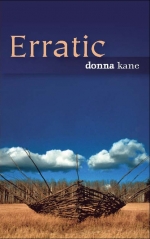
Review of Accidental Animals, by Michael Trussler (Regina, Saskatchewan: Hagios Press, 2007) 98 pp. paper $16.95 and Erratic, by Donna Kane (Regina, Saskatchewan: Hagios Press, 2007) 68 pp. paper $16.95.

Trussler has published book reviews, literary criticism, poetry, and short fiction. His book of short fiction, Encounters (Edmonton: NeWest Press, 2006). He edits Wascana Review.
The opening poem, dedicated to his daughter, adopts the poem as mask, making up stories.
In the second section “Contortions”, the venues and participants are juggled: a pageant, his son, his Pentecostal grandmother; a bestiary, diary-like dated entries; an angel’s Passover and Central Park. The pessimist philosopher Immanuel Kant is in Iraq.
The title poem, (“Portrait with Arbitrary Scenes and Accidental Animals”) reflects on the past twenty years, with a defined method:
To invent as if to record s if to love as
if to splash. quick and formulaic graffiti across
the disregarded slums of the mind
(p. 22)
A she-crow makes her appearance (“Salva Nos”),
with Sigmund Freud (“At The Circus Today”).
The acrobat is a woman and “Her body’s
knowledge/is tireless”.
(“The Contortionist”, p. 27)
In the third section, “Inheritances”, a long poem, in four parts, contemplates, “Symbol isn’t dead; it’s a parasite that grows/inside of things.” (p. 30)
At the beginning of time, Adam and Eve, appear with “an orgy of angels” (“Adam’s Three Discoveries”, p. 33).
The poet views his birth as the year of the Kennedy assassination (“To My Two Children, Who Don’t Remember The Twentieth Century”) and he looks to the painter Chagall.
In a poem dedicated to poet Don Coles, author of Forests of the Medieval, the poet was influenced by Edward Munch’s painting, “The Scream” (“Science Solves Munch’s Most Famous Painting”)
In section four “Loves”, four windows and the fifth dimension, his son, himself, and his father, “They, my dead, bend” (“Four Windows”, p. 51)
He accounts for time by the number of words, making “Many thousands of young/and older words ago” (“My First Love”, p. 52)
Relevant to the title of the collection, in “The Animals”, his daughter “lost” a word, such that:
animals are no longer animals, animals
have become what they should be
(P. 53)
Despite the specificity of a poem’s title, the poet becomes a baby again, and his son will do the same, in elastic-like time, when the word “cat” is introduced. (“This Afternoon”, p. 55)
He expresses nostalgia for where he used to live (“Upon Separating”). The harsh prairie weather conditions are unlike Prague, although the poem was written to and about Franz Kafka, with mention of Karl Marx and Rilke and puns on the Black Panther, with a child’s toy (“A Day in the Morning”)
In “Her Side” the poet articulates the separation but adopts his partner’s viewpoint. However, the diction of Pulling each day we spend together out of/my cunt” does not sound believably. (p. 63). Her faithless partner has forgotten his promise, while she has accurate memories. The imagined monsters are just as real , but we don’t need to make them up (Jean Luc Godard, In Praise of Love) in “just Like That”), p. 72)
There is an itinerary of shopping and of fellow shoppers, “The Grocery Store Is Willing To Sell”. His method follows:
that a poem should amble between images, should
contain as many vowels…
…as a grocery store holds food
and other things…
(p. 65)
and of devouring experience (“Aubade”).
Absence makes the heart grow fonder and also generates creativity (“Adumbration”). An aphorism speaks to the dictionary, failure shadowed, “always dogging along.” (p. 71) He relies on and revels in indeterminate time (“A Five-Year Old With Scissors”).
The poet articulates his views about graffiti art as vandalism (“Just Like That”), in the same breath as Ruskin, Picasso,
and then God caught me
looking, not
at him
but for you,
amy, for
you.
Note that God is capitalized but not “him” or “amy”, diminutions
In section five “Conversations”, the poet shares more about his process. In “Collecting”, he draws his imagery from popular culture, “Guns N' Roses” not the cheap copy of a painting by Michelangelo
The heightened experiences of the poet Rilke bear comparison with the ordinariness of domestic strife, “he [Rilke] sees that a woman has/bawled because of the way a man/has watched a television.” (“Interruptions”, p. 81)
In “The Mirrors”, a poem addressed to Arthur Schopenhauer, author of The World as Will and Representation, the poetponders the meaning of current events, the respective roles of art and nature, cave paintings, and the Minotaur returns (a debt to Eli Mandel).
“Inside The Dog Park”, (dedicated to Saul Bellow, The Dean’s December) a dog is named for Frida, the artist. The poet praises a prairie boy’s poetics (of Kurulek-like keen eye and painterly insight). His kenning is to bring Kurulek back from the dead. This poem is nominally about a Regina dog park, albeit from Pompeii,
at
the prairie’s edge
where the sky is
the same blue/gray
as the numbers
tattooed in their ears.
(p. 87)
The second book under review deals with the natural world, aurora borealis, desert and forest, wilderness, slough; whether a raven, a moose, because she is “a wild child”. (“Awakened”) The venues are replete with chickadees, squirrels, bees and moths; robins, mouse, crows, snake, chicks; grizzly, red-winged black bird, frog, cat. In this eco poetry, with these “on-purpose” animals, the persona identifies with the prey rather than the predator. She is moth and appreciates metamorphosis (“Late Summer Hatch”); or photosynthesis (“Induction”); and stereotypy (“which means the pathological pacing of caged/animals.” (“Once I Ate A Moose Turd”, p. 54). Keen senses, such as intuition and weather forecasting from a savant are qualities evident in this eco-conscious lyric poetry, with two prose poems, written margin to margin. The book was edited by Don McKay.
The title poem engages the reader on several levels: a) deviating from the ordinary or standard, eccentric or strange, for example,
I wore my pajamas
inside-out. This morning inside-out
and backwards. Each time
when I noticed,
I was already used to it.
(“I Never Gave Up”, p. 33)
Parts I and II of “When You Came To Me Asking To Be Held” are in reverse chronological order.
Another meaning is b) transported, as if by a glacier, and the polar ice cap is melting due to global warming and human emotion.
Throughout, the poet’s vision is constant, although the settings are c) in-consistent, irregular, non-uniform, and d) wandering, having no fixed course, nomadic.
This theme is reinforced by “Solecism”, a minor blunder or an ungrammatical combination of words in a sentence; deviating from the proper, normal, or accepted order, a breach of etiquette or decorum.
The collection begins with solstice (“Thin Ice”) an ode to a
prairie crocus, rosy ever-lasting,
campion, calypso orchid, a wish
to see you, rock cress.
(“Coming True”, p. 63)
rhetorically asks:
What happens on the prairies
when a cold moon rises
pink above the snow
is happening here—a pause
of unapologetic beauty, our own
goings on of no concern,
excess
long-ago abandoned.
(“Leaving Vegas, The Sun Setting On The Mojave
Desert”, p. 38)
ends with a poem “Summer Solstice”
from a hill’s highest point, your head full of chlorophyll,
heart shucking winter like a clayload of guilt, like pollen
with its no-aim strategy, touching everything
to compensate loss. You exceed yourself.
(p. 61)
Kane’s first book, Somewhere, a Fire, was published by Hagios Press, in 2004. She directs Writing on the Ridge, a non-profit organization to foster the arts in northern British Columbia.
Anne Burke
Review of Conversations with Carol Shields, Random Illuminations, edited by Eleanor Wachtel (Goose Lane: Fredericton, N.B, 2007) paper 200 pp. $19.95
The present collection contains interviews with, and also correspondence by, Carol Shields, associated with the writing and publication of her books.
This is a new addition to the editor’s other books of interviews, Writers & Company, More Writers & Company, and Original Minds.
It begins with “Scrapbook of Carol”, a personal essay by Wachtel, who was grieving the death of her mother, but became Carol’s “official bibliotherapist.”
Shields contemplates her childhood (akin to Annie Dillard’s An American Childhood) in “Always a Book-Oriented Kid, The Early Interviews: 1988-1993.” She studied “Dick and Jane” readers, wrote sonnets, then short stories. She took an M.A. in Canadian Literature on Susanna Moodie at University of Ottawa, where she heard Betty Friedan speak on The Feminine Mystique. She was capable of writing from a male point of view, as well as becoming an “in-between” feminist. Mentioned in passing are: Small Ceremonies, The Box Garden, Happenstance, A Fairly Conventional Woman, Swann: A Mystery, Various Miracles, The Republic of Love, and The Stone Diaries.
The next section is a selection of “Letters, 1990-1994” by Shields to Wachtel, beginning with an exchange of Annie Dillard’s The Writing Life. Shields commented on her reading materials, teaching Creative Writing, travel, and academic work. Despite completing two articles, on Jane Austen and Margaret Laurence, “I’ve decided I don’t have the bones for academic writing, too much glue and equivocation and timid forays into other people’s theories. Enough.” (p. 59)
By the time of “The Arc of a Life”, Larry’s Party, Toronto, October 1997, Shields had earned “overnight success” with The Stone Diaries, which won the Pulitzer Prize, The National Book Critics Circle Award, and the Governor General’s Award. Yet, she claims her writing life remained the same. Her new novel arose from a short story called “Larry’s Jacket” and discussions about male friendship, which resulted in “this re-evaluation of what it is, what it means, to be a man.” (p. 88)
In “Letter, 1998”, Shields has applied for the Guggenheim Fellowship, with Wachtel as a reference. In “Art Is Making”, Onstage For The Humber School For Writers, Toronto, October, 1998, Wachtel pursues themes or patterns in both Carol’s life and books. Some topics are “why people read novels” and the function of book clubs. Shields reviewed Lucy Maud Montgomery’s Journals, in the Globe and Mail. She attended her forty-fifth high school reunion. In “Throttled by Astonishment”, Dressing Up For The Carnival Onstage At The International Festival Of Authors Toronto, October 1999”, she previews a new book of short stories and its origins. Shields had been diagnosed with breast cancer.As a result, she wanted to write and read about people with common experience, to avoid the feeling of being alone. At first, she refused to keep a “cancer journal”. Her favourite book was Swann, “I just loved the energy that was flowing through me when I wrote that book, so I remember it as a period of great happiness.” (p. 119)
Shield identifies with Jane Austen, who died in 1817, at forty-one, because both authors did not produce “autobiographical” books. Shields is of two minds about knowing more about a writer. “It may give us understanding of how the novel was put together and why and what it means.” She adds, “And maybe we don’t need to know this. Maybe we don’t need to know anything about the writer.” (p. 143)
Yet, in “Letters, 1999-2001”, Shields confesses, “I think I am happier writing fiction [than the monograph on Austen].” (p. 123). In “A Gentle Satirist, Jane Austen, Carol’s Home, Victoria, March 2001, Shields and Wachtel explore the key events in Austen’s life and the influence of Austen on Shields, who once wrote “My debt to Jane Austen herself is incalculable.” (p. 125) At the same time, Shields believes, “I don’t think my novels are anything like Jane Austen’s novels.” It is interesting to read their speculation on what might have become of Austen, if she had married, since Shields decided to marry and raise a family. What Austen read was a factor in how she wrote, like Shields. How Austen died is important. Poignantly, Shields suggests, “People didn’t talk about cancer in those days and certainly weren’t able to diagnose it always, but I think this is the most probable cause of her death.” (p. 141)
In “Letters, 2001-2002”, we discover Shields “off to chemo right this minute” and “I was in love, standing over the ironing board.” (pp. 145-6) In “Ideas of Goodness”, Unless, Carol’s Home, Victoria, January 2002, Shields reveals the source of the title, in fiction and reality. She relents, in “you’re not forever writing your own autobiography, which is the last thing that most of us want to do.” (p. 151) She has been “interested in the idea of goodness for a number of years.” (p. 153) The “casual disregard of women can be worse than more visible forms of aggression against women.” (p. 155) Of course, September 11th, 2001, has unleashed another cycle of fanaticism, tyranny, and rage. Shields feels she has become increasingly radical. Self-forgiveness is necessary to dispel regrets.
Shields (and Marjory Anderson) edited Dropped Threads (Wachtel was a contributor).
Wachtel is a recipient of six honourary degrees and, in 2005, she became a Member of the Order of Canada.